The first textbook on the Palestinian dialect, Kufir Yasīf, was written by a Palestinian-Finnish scholar
Kufir Yasīf, a village situated twelve kilometres northeast of the coastal city of Acre in western Galilee has a specific Arabic dialect, and now, for the first time, there is a textbook for it. In 2022 Kufir Yasīf is an Arab village of more than ten thousand inhabitants, among whom are Christians, Muslims and Druze (in 1877 the number was 500 inhabitants: 300 Christians, 150 Muslims and 50 Druze, whereas in 1922 the number was 870: 665 Christians, 172 Muslims, and 33 Druze).
I dedicate this work on my mother tongue to my first teachers, my loving late parents. I also dedicate it to my wife, to the following generations, my children and grandchildren, as well as to all Palestinians in particular and Arabs in general living outside their homelands.
The first textbook on Kufir Yasīf dialect is out now
Generally, a student of any language, whether the language be alive or dead, needs reliable grammar books, dictionaries and texts. Texts are essential because they provide examples of grammar and vocabulary. Original and authentic texts are the foundation of grammar and vocabulary.
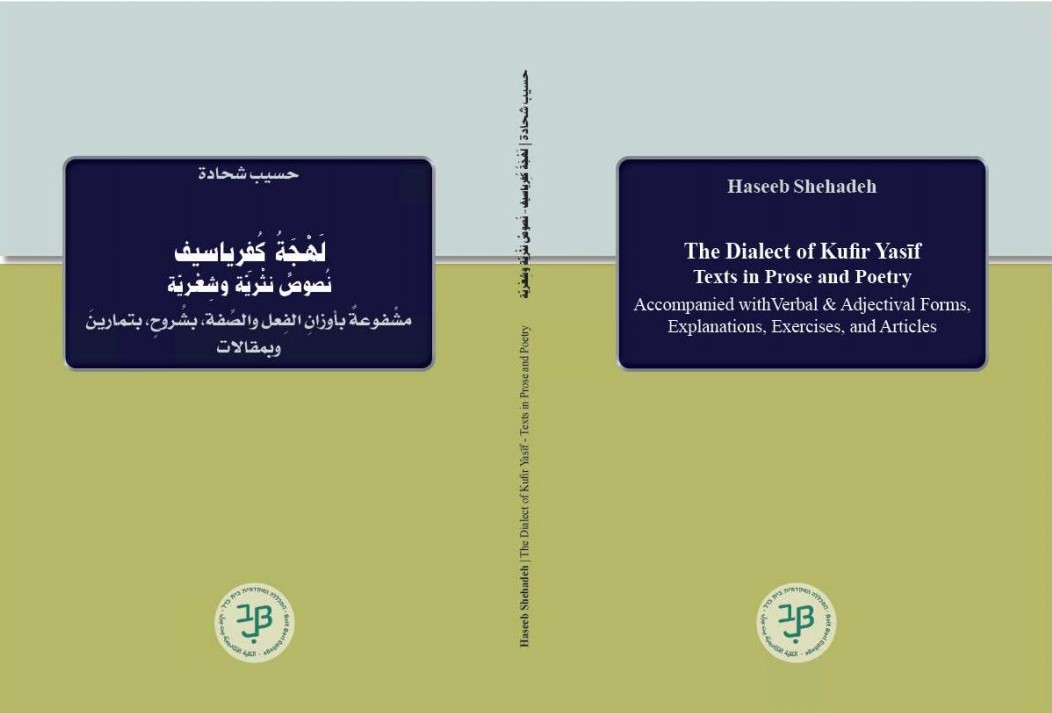
This new textbook, The Dialect of Kufir Yasīf Texts in Prose and Poetry, Accompanied with Verbal & Adjectival Forms, Explanations, Exercises, and Articles, provides a collection of texts and a plethora of exercises (over five hundred) on the Palestinian dialect of Kufir Yasīf, and it is intended for teachers, dialectologists and advanced students of Arabic dialectology as well as all people interested in spoken and written Arabic and particularly Palestinians living outside their homeland.
There still seems to be a remarkable paucity of Palestinian Arabic texts in general for students and scholars, in particular in Kufir Yasīf’s dialect. As far as I know, this textbook is the first of its kind. Reading, speaking, understanding, thinking and writing are essential steps and conditions for a profound acquisition of living languages and dialects. In addition to grammar, the book includes texts of different lengths, including stories, a play, anecdotes, a memoir of my father, and proverbs. A comprehensive bibliography on Palestinian dialects is found at the end of the book.
From Kufir Yasīf to Finland
The texts in the book present the dialect of Kufir Yasīf as preserved in my memory and life experiences. Yet memory alone is not enough. I was born in Kufir Yasīf in 1944, studied in its elementary and secondary schools and lived there for my first nineteen years. Thus, the dialect of Kufir Yasīf is my mother tongue. During the academic year 1967–1968, I served as a teacher of Arabic, Hebrew, and English in Kufir Yasīf’s secondary school where Arab students from over forty villages and towns came to study.
Although I have taught other dialects, in particular the Jerusalemite dialect, I have always done my utmost to preserve the Kufir Yasīf dialect: I have taught it to my wife and our children, and it has become the alternate vernacular in our family. I am proud of this achievement, especially given that I have been living in the Palestinian diaspora for more than three decades.
Although after the age of nineteen I have lived geographically far away from Kufir Yasīf – first in Jerusalem, then in Berlin and finally in Finland – my connection with my birthplace and home country have continued apace. Our family has visited the Holy Land on a near-annual basis. We also stay in touch with relatives and friends through modern technology such as video calls, email and WhatsApp; we listen to broadcasts from Nazareth; and we stay up to date via electronic papers. In sum, my active knowledge of my mother tongue has grown and been enriched over time. Today Arabic is often heard even here in Finland, especially after the recent waves of immigration from Iraq and Syria. Everyone usually keeps his own dialect in conversations, while learning new words and usages from one another.
Kufir Yasīf dialect has changed
One characteristic feature of my idiolect as well as the idiolects of members of the same age and older is the absence of Hebrew loan words and expressions. Today the overwhelming Hebrew elements in the Arabic of Kufir Yasīf as well as in other areas of the Green Line (the [pre-]1967 border or the 1949 Armistice border) make up one of my dialect’s central traits. To avoid Hebrew loanwords, I have used uncommon Arabic words and expressions throughout the texts in my book.
The textbook also includes examples of rhymed popular poetry, some of which deal with occasions of joy and some with occasions of sorrow. No modifications have been made with regard to the texts that appear in Arabic script. Words and expressions deemed to be unusual and difficult have been explained in footnotes in MSA. It is obvious that, to some extent, written Arabic and spoken Arabic co-exist and affect each other. Thanks to modern cultural and educational diffusion, technology and globalisation, the gap between literary Arabic and colloquial Arabic continues to diminish. There is thus an urgent need to record, transliterate, and investigate this rich and authentic linguistic heritage before it is lost.
Arabic has multitude of dialects and registers
It should be noted that spoken Arabic in its endless dialects – and the mother tongue of more than four hundred and twenty million people – appears in columns in many daily newspapers and periodicals as well as on various social media platforms and in comments in electronic articles. It is not unusual to find some of these texts in Hebrew script.
The main three criteria for dividing Arabic dialects into groups are geographical, social and communal. This important manifestation of Arabic is reflected in the two main forms of language: prose and poetry. This poetry, called al-ši˓r al-ša˓bī (popular poetry), is flourishing in the Arab world in various degrees and is enthusiastically welcomed by all native speakers of Arabic. This is no great surprise because Arabic culture is mainly a verbal one. On happy occasions, such as weddings, and on sad ones, such as funerals, one can hear samples of this rich, lively and verbal folklore, which speaks straight to the minds and hearts of all native speakers. It differs from the daily spoken language, which is employed mainly as a tool of communication.
In writing poetry, language is far from being just a tool; it is a special kind of energy and a substantial part of the dynamics of creativity and originality. In fact, the usage of language, any living language, as a tool of communication is the lowest level of mastery. On the other hand, at its highest level a language is an organic part of national identity, tradition, a way of being and a philosophy of life.
It is an established fact that MSA plays its own significant role throughout the Arab world as the language of written culture in which literature, the sciences, school textbooks, and newspapers are written. MSA is also heard on radio and television news, as well as in formal speeches and religious preaching in mosques and churches. On the other hand, spoken Arabic is the usual daily tool of communication and often creeps into different literary works, especially in dialogues.
Some plays have been written completely in spoken Arabic, such as Bethūn by the Palestinian writer Tawfīq M˓ammar (1914–1988) and al-Bahlawān by the Egyptian writer Yūsuf Idrīs (1927–1991). Spoken Arabic, as a rule, is used in movies and caricatures, and it enriches many aspects of the written language. In some Arab countries and particularly in Lebanon, spoken Arabic is utilised in political, social and cultural discussions on TV.
Along with MSA and spoken Arabic, the third significant type of Modern Arabic is the so-called educated Arabic or common Arabic or lughatu baina bain. This manifestation of Arabic, which is neither written nor spoken in the ordinary sense, functions as the tool of communication and thinking among educated Arabs on formal occasions and is the tool of understanding among native speakers of different Arabic dialects, such as the Moroccan dialect in general, among the western Arabic idioms and the Palestinian vernacular among the eastern dialects. A specific modern Arabic dialect is the mother tongue of every Arab in which that individual feels and thinks, and it is connected in a complicated and subconscious manner with MSA, which a person acquires systematically at school from the age of six until the end of secondary school, as well as by reading and listening.
Looking for an academic reviewer
Unfortunately I have been unable to find a suitable scholar in Finland to write an academic review of my textbook, either in Finnish or in English. This is particularly surprising given that Finland has produced several distinguished scholars of Arabic dialectology, including George August Wallin (1811–1852), Jussi Aro (1928–1983), Erkki Salonen (1930–2015), and Heikki Palva (1935–2022).
Full information on the new textbook:
Haseeb Shehadeh, The Dialect of Kufir Yasīf Texts in Prose and Poetry, Accompanied with Verbal & Adjectival Forms, Explanations, Exercises, and Articles. The Centre for Language, Society and Arabic Culture, The Arab Academic Institute for Education, Beit Berl College 2024, ISBN 978-965-92511-5-5.
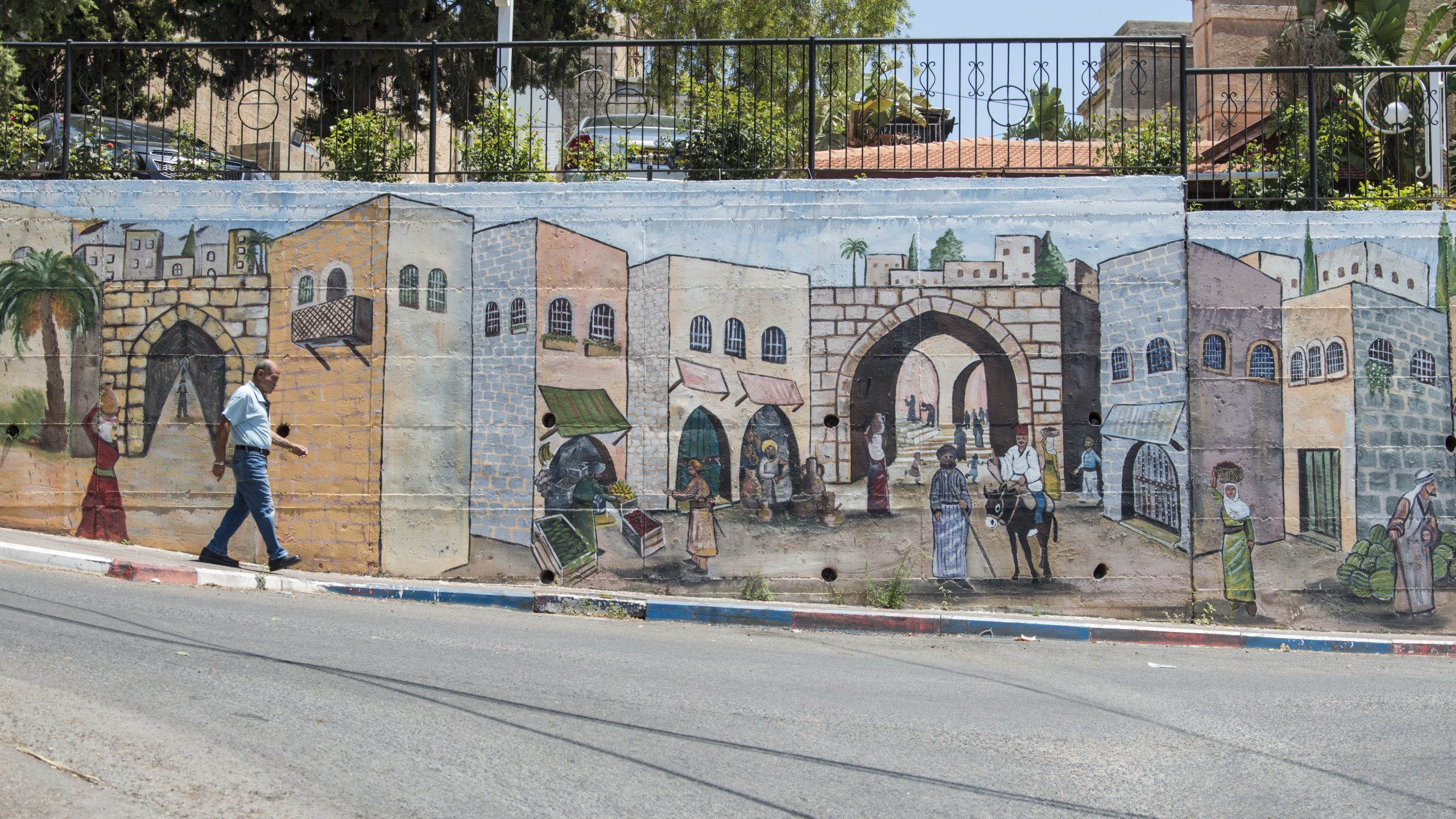
Cover photo: A man walks past a mural depicting a historical scene in Kufr Yasīf in 2015. Photo: Daniel Reiner.
Kirjoittaja
Haseeb Shehadeh
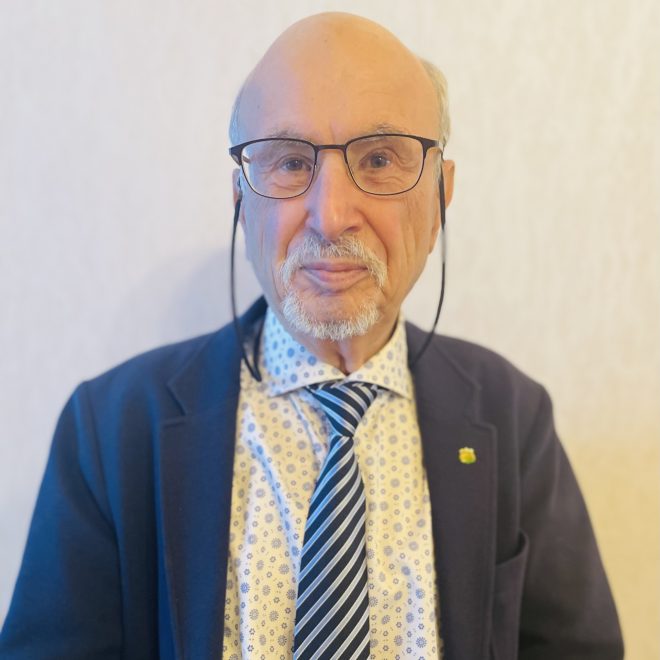
Prof. Haseeb Shehadeh was the first Arab to earn a PhD in Hebrew from the Hebrew University of Jerusalem. He has taught Hebrew, Arabic, and Samaritan Aramaic at several universities. His publications include The Samaritan Pentateuch in Arabic (2 vols.); Selected Modern Hebrew Texts with Exercises; Words of Wisdom, Sayings and Proverbs in Every Field (in Arabic); From the Writings of Abu Ḥazm al-Kufirsāwi: Miscellaneous Articles, Part One (in Arabic); and Treasure of the Samaritan Folktales, translated from Hebrew into Arabic. He has also published more than 120 scholarly articles and over 800 articles for the general readership. In 2011, he was awarded the Samaritan Medal for his contributions to Samaritan Studies, which was presented at the University of Helsinki.
Aiheeseen liittyvät artikkelit
Vaihtelua jordanialaiseen tapaan – arabian opiskelua ja sukellusreissu Aqabaan
Arabiaa, hevosia ja sodan ääniä Syyrian rajalta