A Year Without Assad: Between Celebration and Uncertainty
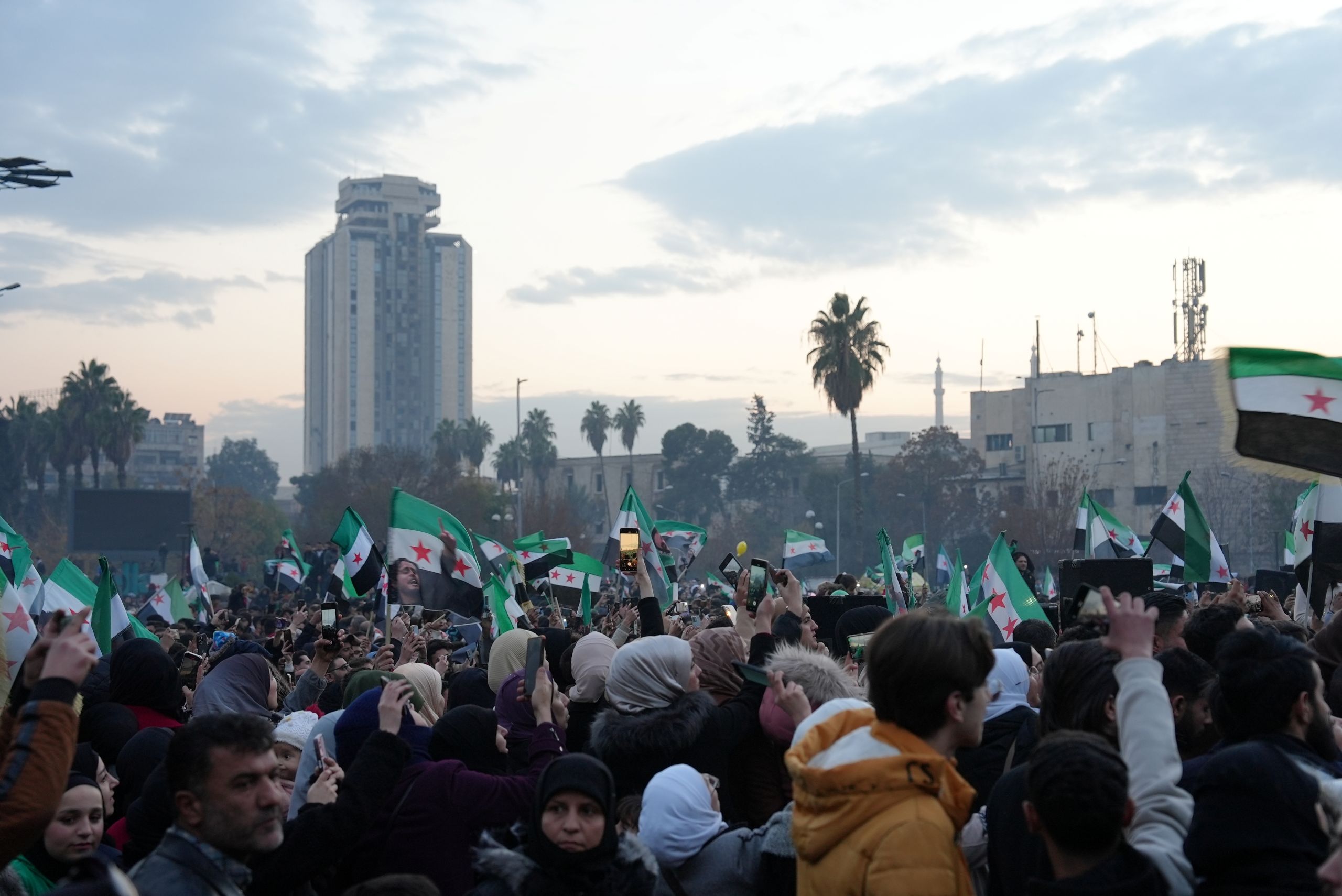
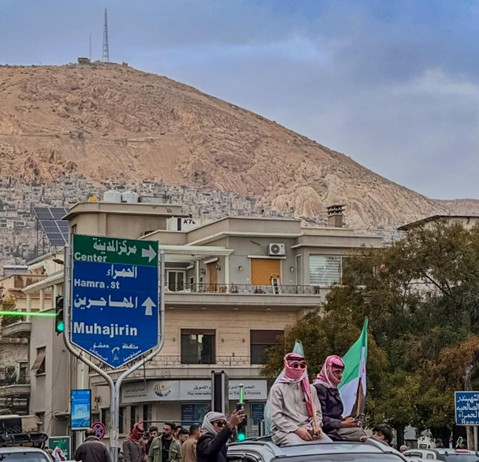
The 8th of December 2025 marked one year since the fall of the Assad regime. The streets of Damascus were filled with people celebrating, and everyone seemed overwhelmingly happy. Rarely have I received such uniform answers to the question “How are you feeling today?” as I did that day.
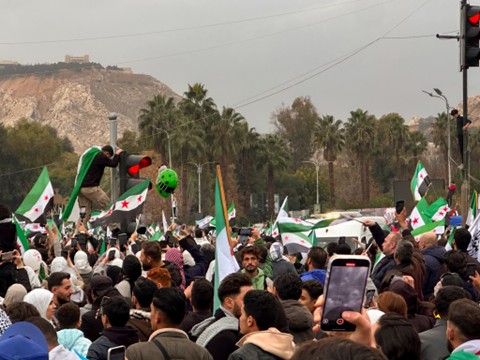
“We are so, so happy” was, without doubt, the most common response. In fact, I cannot recall a single answer that expressed anything other than sheer joy – though those who felt differently were unlikely to be out among the crowds that day.
The celebrations were nothing short of extraordinary. Large screens displaying interim president al-Sharaa’s face were visible across the city, and at Umayyad Square, parachutists flew overhead carrying the flags of Syria, Palestine, and Lebanon. It was a spectacle, to say the least.
When authoritarian regimes fall, people are often quick to celebrate, but the more difficult question is what comes next. In Syria’s case, even experts admit they struggle to predict the country’s future – with many remaining skeptical towards the new leaders, particularly due to Hayat Tahrir al-Sham’s (HTS) central role in the new power structure.
The new interim government, led by Ahmad al-Sharaa, the former leader of HTS, came to power in March 2025 and is meant to govern Syria during a transitional period lasting until 2030. While it has made progress in some areas – including the easing of economic sanctions and the restoration of diplomatic ties – few Syrians have seen tangible improvements in their daily lives, with an estimated 90 per cent of the population living below the poverty line.
While the celebrations appeared – at least outwardly – to reflect nothing but happiness and relief, a very different sentiment prevailed among the country’s minority communities. Their fear of the current regime stems primarily from HTS’s violent past toward them and has been reinforced by continued serious abuses and mass fatalities in 2025, some of which have involved forces linked to the current authorities.
Syria’s Youth: Profound Inequality, a Public Education Crisis, and Continued Brain Drain
It’s a weekday afternoon, and my friend and I are about to meet a couple of Syrian university students at an old café in central Damascus. The café is in a typical Damascene courtyard – a trademark of the Syrian capital.
The lives of our new acquaintances do not differ much from our own. They attend university, practice sports, take part in (and organise) hiking trips, and fill their days with other seemingly ordinary activities. They tell us that it feels like a relief to finally be able to talk about politics openly, joking about how controlled their lives were under the Assad regime. My friend and I – both Northern Europeans – are surprised and impressed by how easily they speak about these topics. They point out that there is little else to do but move on, reflecting a certain Syrian lightness.
One of them studies architecture at university. While she acknowledges that architects are badly needed in Syria, she still dreams of moving abroad. She is not alone. A 2025 poll by the local media outlet Hashtag Syria found that nearly 30 per cent of young Syrians would consider emigrating if given the chance, mainly due to limited economic and career prospects – a trend that continues to fuel the country’s brain drain, widely seen as a major obstacle to Syria’s development.
While this more mundane life that our new acquaintances are living is rarely showcased in global media, it is important to remember that only a minority can afford it. A recent UNICEF report estimates that nearly half of Syria’s school-aged children remain out of school, mainly due to poverty, damaged infrastructure, and displacement.
After drinking endless cups of tea and learning a surprising amount about Syrian hiking culture from our new acquaintances, it is finally time to return to our accommodation. It is nearly midnight when we pass a construction site. Some of the workers appear barely in their early teenage years, yet they are engaged in heavy physical labour in the middle of the night. The contrast between the university students we had just left and the children at the construction site serves as a stark reminder of the deep class inequalities that continue to shape life in the country across generations.
Reconstruction and the Return of the Displaced
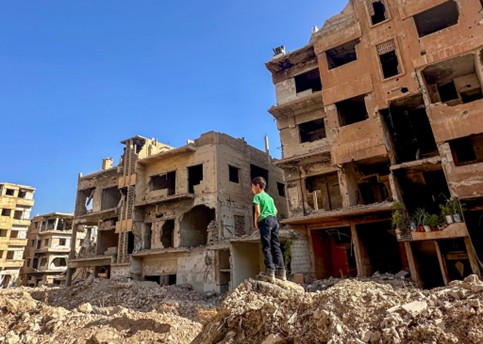
Even in some of the most destroyed neighbourhoods, people have begun returning to their homes. Moving back to such places poses serious risks, yet for most, there is little alternative.
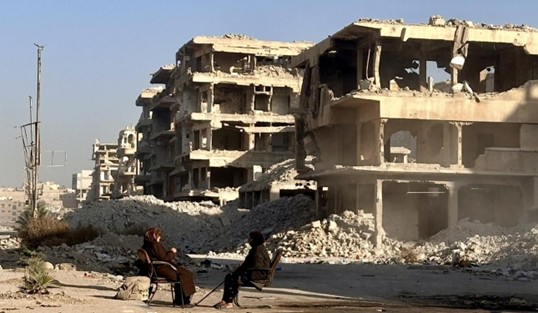
While we walk around in the predominantly Palestinian neighbourhood of Yarmouk (one of the most heavily destroyed areas in Damascus) we come across a house that is covered in colourful tiles. The owner explains to our local friend that those are the remnants of the family’s mosaic factory that was destroyed during the war. They also have a garden filled with ornaments. It is a beautiful place, but also a quiet testament to how returning residents are, more often than not, left to rebuild their homes on their own – a burden that remains a luxury only a few can afford.
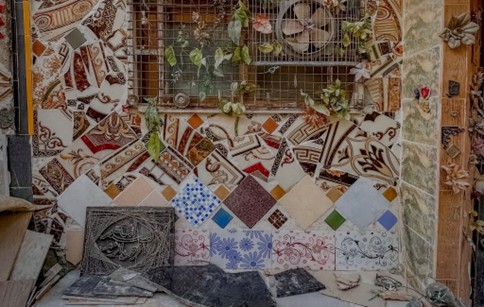
Syria still lacks a unified national reconstruction plan while the World Bank’s best estimate for the total reconstruction costs of the country lie at 216 billion US dollars – money that the country simply does not have. A recent report from The Syrian Observer states that some minor efforts to clear and recycle rubble in war-torn areas are under way. However, experts continue to stress that without a clear national plan in place, such efforts are unlikely to have a lasting impact.
For now, Syria’s reconstruction is primarily based on volunteer initiatives where ordinary citizens come together to rebuild what has been destroyed. While the majority of such efforts remain poorly coordinated and heavily underfunded they testify to an entire population’s deep determination and willingness to rebuild a country with next to nothing – yet again proving the extreme resilience of a people that is tired of hearing just that, as such praise serves as little constellation unless it can be turned into food on the table.
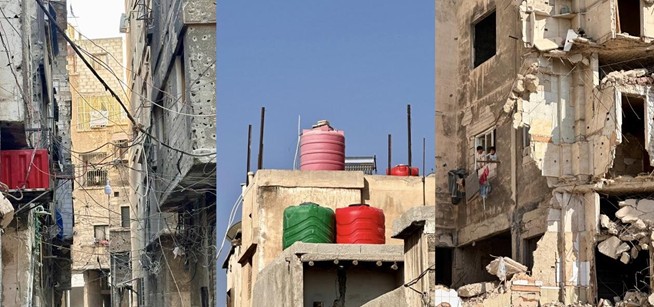
Both the internally displaced and those who fled abroad have gradually begun returning – some more voluntarily than others. After Assad’s fall, European states issued contradictory statements regarding Syrians’ asylum status, suspending or reassessing claims while simultaneously encouraging or, in some cases, forcing returns. This uncertainty created fear and instability among Syrians living in Europe. Many were left in limbo, wanting to visit their home country after years in exile but unable to do so without risking their right to return to Europe. Human rights organisations have sharply criticised these policies, condemning them as inhumane and degrading.
54-year-old Mohammad fled the Assad regime in 2017 and has spent the past six years in Germany, where he lives with his two daughters. He is among those who now risk being sent back to Syria – a possibility that deeply worries him.
“The streets in Syria are not designed for wheelchair users like myself, and my daughters do not wear the hijab, which I fear could make their lives more difficult under the new transitional authorities,” he explains. As a chronically ill person, he is also concerned about the availability and cost of his medication in Syria. After a long integration journey, he and his daughters have finally built a new life for them in Germany and feel that returning to Syria is not a viable option for them – a sentiment that is shared by many who have been forced to rebuild their lives from scratch in a new place. In addition, many have nothing to return to — no home, no job and no social support network – raising serious questions about what good sending them back to such conditions would achieve.
Minorities in the Wake of Syria’s Power Shift
Under the Assad regime, minorities were, to a large extent, protected and knew what to expect – a sense of predictability that many now feel has disappeared.
Ahmad al-Sharaa has pledged to resist sectarianism and form an inclusive government, something he has, at least outwardly, attempted to show. Of the 23 ministers in the current cabinet, four come from Syria’s main minority groups: Christian, Druze, Kurdish, and Alawite. How this symbolic inclusion will translate into real protection and meaningful political influence for minority communities in practice remains unclear.
Over the past year, minorities have faced serious security threats. In Suwayda province, Druze areas experienced violent clashes, including extrajudicial killings and attacks on villages. Along Syria’s coastal regions, Alawite communities were subjected to some deadly reprisals, marked by mass killings, disappearances, and identity-based targeting linked to perceptions of collective responsibility for the former regime. Christians experienced fewer large-scale attacks but were affected by highly symbolic violence – most notably a devastating church bombing in Damascus – alongside vandalism and intimidation targeting religious sites.
For many minorities, the core issue has therefore not been official rhetoric about inclusion, but whether the state can consistently guarantee safety, enforce the rule of law, and prevent armed actors from operating with impunity.
Continued violence against minority communities over the past year has triggered new waves of displacement both within Syria and abroad. Many of those forced to flee had previously returned home after the end of major fighting, only to be displaced again following fresh attacks, revenge killings, or threats linked to sectarian identity.
While suggesting that minorities were unequivocally better off under the former regime would be an oversimplification – Assad’s relationship with minority groups was neither uniform nor benign – the new power structure has nonetheless raised serious questions about what lies ahead for the country’s minorities, particularly in terms of physical safety and protection.
Closing Reflections
It is around four in the afternoon when we call a mutual friend to ask where he is. “I’m going back to the square,” he says, and we jokingly ask whether this isn’t already his fourth time there since the morning. “It’s addictive,” he replies, urging us to come too. He wasn’t wrong. We returned three times that day, and each time the crowd at Umayyad had grown louder and denser than before.
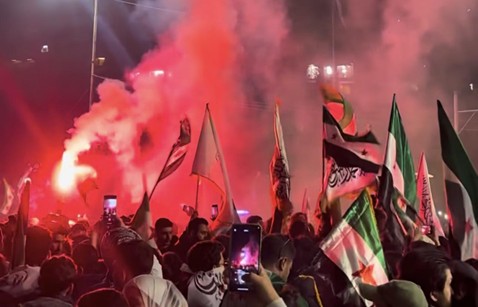
I was constantly reminded of how privileged I was to be there at all, taking part in the Syrian people’s celebrations, while many Syrians – such as those who remain stuck in legal limbo abroad and would have wanted to celebrate – were unable to do so. While this is just one of the many injustices the Syrian people continue to face, it was a relief to witness how much joy this day seemed to bring to those who were celebrating, even if only for a while.
It would be naive to assume that the fall of an authoritarian regime would instantly resolve the problems of a war-torn country facing a long list of complex challenges, with most of its population still living in deep-rooted poverty. However, many have chosen to place their hope in the new authorities – not because this is necessarily the best outcome, but because they see the alternatives as far more frightening. After all, without a single central authority, a fragmented country like Syria risks sliding into low-level conflict, with competing armed actors controlling the streets and external powers backing rival factions – a scenario a war-exhausted population understandably wants to avoid.
Cover photo: Thousands of people celebrate the liberation of Syria on January 10, 2025. Photo: Mohammad Bash.
Kirjoittaja
Emmy Snickars
Emmy Snickarsilla on tutkinto kansainvälisistä suhteista ja kehityksestä, ja hän on keskittynyt itäiseen Välimereen, jossa hän on työskennellyt useita vuosia voittoa tavoittelemattomilla organisaatioilla ja mediasektorilla. Hän asuu tällä hetkellä Beirutissa.
Aiheeseen liittyvät artikkelit
Siirtymäkauden oikeus etenee Syyriassa hitaasti ja haparoiden
Vuosi ilman Assadia: juhlan ja epävarmuuden välissä
Koillis-Syyriaa hallinnut SDF on romahtanut – miten tähän päädyttiin?