The Middle East is on fire! Desertification and Environmental Breakdown Between the Tigris and Euphrates
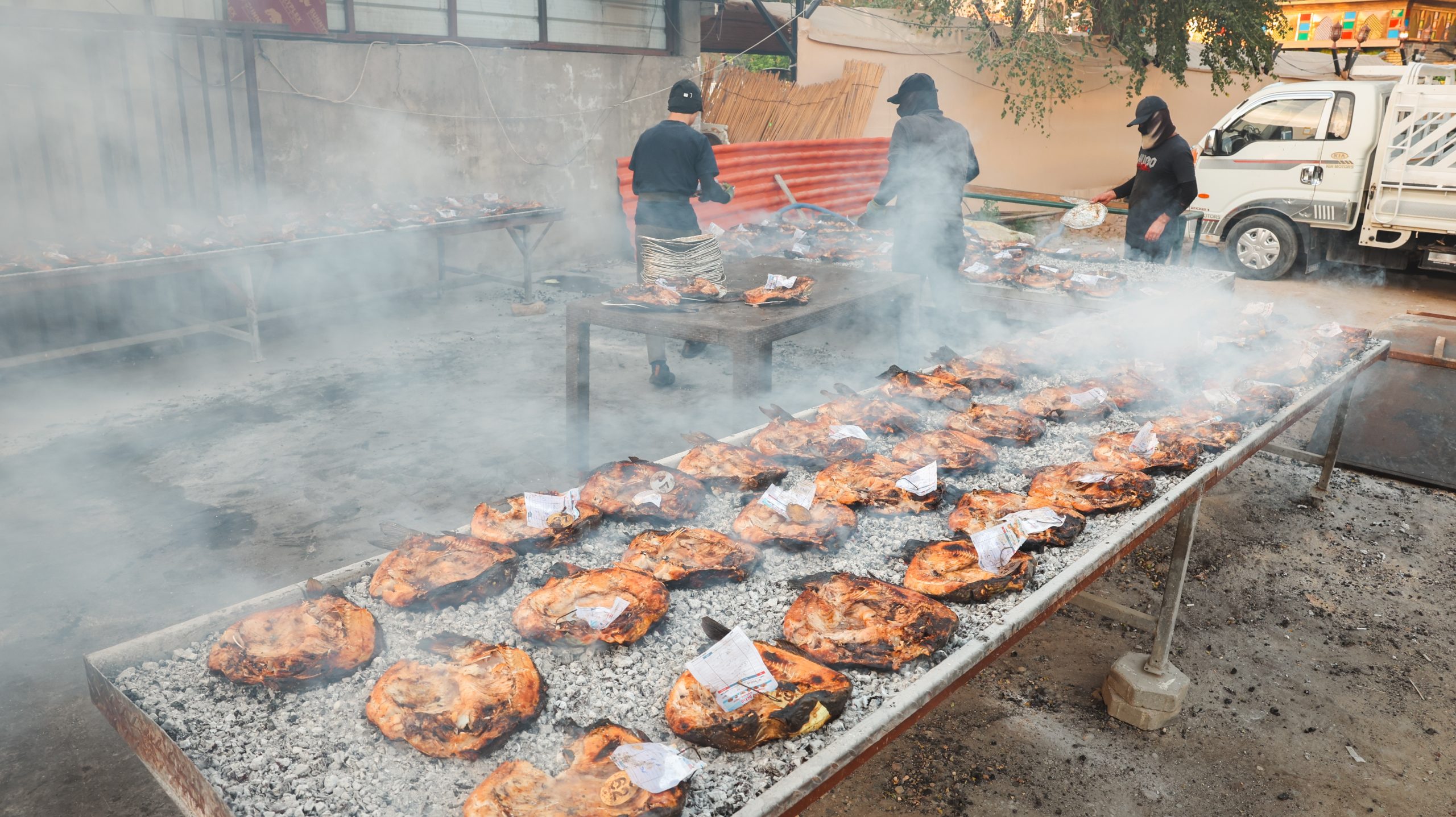
Back in 2017, when I was in Baghdad, the foreigners I worked with wanted to try masgouf, the famous grilled river fish – carp – served at Tigris riverside spots like Abu Nawas. The smoky smell and lively setting made it a favorite for locals. But now, as the river dries up and fish become scarce, this tradition could disappear. Masgouf means more to us than just food. When the river dries, and the fish is gone, it feels like we’re losing a part of our lives. This shows how environmental changes are affecting local traditions and livelihoods and points to the broader challenges Iraq faces.
The United Nations and several international organizations consider Iraq one of the countries most exposed to climate change. The UN lists Iraq as the fifth most climate-vulnerable country, facing rising temperatures, acute water shortages, and rainfall variation.
Water Crisis: The Tigris and Euphrates in Peril
Iraq is known as the ”land of two rivers” because the Tigris and Euphrates made early farming possible here. For thousands of years, people built their lives along these fertile banks. Now, that legacy is in danger as changes in the rivers threaten the region’s way of life.
The heart of the crisis lies in the decline of the Tigris and Euphrates, rivers that supply up to 98% of Iraq’s surface water. Over four decades, river flows have fallen by 30 to 40 percent, according to the UN and the World Bank. This decline appears to result from multiple factors: including dams built by neighboring countries, decreased rainfall, higher temperatures that accelerate evaporation, and the fact that around 71 percent of Iraq’s water comes from Turkey, 6.9 percent from Iran, and 4 percent from Syria.
As neighboring Turkey and Iran build dams upstream, Iraq’s water flow through the Tigris-Euphrates system decreases. Turkey’s Southeastern Anatolia Project (GAP) includes more than 22 major dams and 19 hydroelectric plants on the Tigris and Euphrates. Iran has also constructed more than 20 dams. In addition to ineffective domestic water management, especially in agriculture, Iraq lacks a single, coordinated plan for managing the Tigris and Euphrates, and the absence of clear rules for water use and pollution control has worsened the situation. Untreated sewage and industrial wastes are discharged into rivers, increasing salinity and degrading water quality.
By the Tigris River, Haidar Kazem mourned the loss of 300 tonnes of fish he had raised in ponds. They all died when polluted water from the Diyala River mixed with the Tigris recently. Sadly, this has happened before and is likely to happen again. The sudden flow of polluted water from the Diyala was the main cause. The water probably contained raw sewage, farm runoff, and factory waste. Normally, higher river flow would dilute these pollutants, but drought and upstream water control had already lowered water levels, worsening the pollution.
High temperatures also played a role. Warm water holds less oxygen, and when polluted water carries organic material, bacteria break it down, using even more oxygen. In fish farms, where water doesn’t move much, this can quickly wipe out fish populations. These fish die-offs are not new. In the past 10 years, Iraq has seen them happen repeatedly. During this incident, local authorities told people not to drink from the Tigris after more than 20 people were hospitalized with poisoning and skin issues.
Last November, Iraq and Turkey signed a multi-billion-dollar Water Cooperation Framework Agreement, known as ”oil-for-water.” Under this deal, Turkish companies will build water infrastructure in Iraq, funded by Iraq’s oil exports. Iraq will supply oil daily, and the revenue will fund Turkish-led construction and upgrades to water systems. The agreement should bring much-needed investment to repair aging water systems, improve irrigation, and increase water storage, which could help address Iraq’s water shortages.
Still, there are big challenges ahead. Success will depend on how well the projects are carried out, on ongoing cooperation between the two countries, and on whether the new infrastructure can keep up with worsening water shortages and climate change. The agreement is indeed a good step, but it is not a full solution and will need ongoing effort and oversight to really help.
Desertification
The Central Statistics Office of the Iraqi planning ministry reported in 2024 that lands classified as desert or threatened by desertification totaled 96,500 square kilometers (km²), accounting for 55.5% of Iraq’s total territory. Fully decertified land rose to 40,400 km², or 23.2 % of the country. This situation is driven by poor water management, land-use issues, and regional politics. Lower river flows dry out the soil and weaken plants, turning large parts of the south, west, and east into sources of dust. Overgrazing removes the roots that hold soil in place; heavy irrigation increases soil salinity, and excessive groundwater use dries up what’s left.
Desertification speeds up. NASA Earth Observatory reports that since April 2022, Iraq has faced many severe dust storms, which have become a regular and disruptive part of life. Recent storms have closed schools, businesses, and airports, and sent thousands to the hospital due to poor air quality. The healthcare system, already overwhelmed, often cannot keep up with the number of patients during these times. Neighboring countries like Syria, Saudi Arabia, and Iran face similar problems, as long droughts and poor land management have made desertification and dust storms worse. These patterns show that Iraq’s crisis is part of a larger environmental problem across the Middle East.
The Marshes: Collapse of an Entire Ecosystem
The Mesopotamian marshes once covered 20,000 square kilometers, but they lost 90% of their area in the 1990s. Since 2003, there has been some recovery, but it is unstable and depends on water and drought. These marshes used to be among the largest wetlands in the region and helped stop desertification. Now, over 90% are gone, with 20% turned into farmland and only 10% remaining. The marshes no longer provide the plants, animals, or natural benefits that once helped control the local climate and supported communities. As they shrink, the land dries out more quickly, worsening desertification.
Today, in southern Iraq, the marshlands show another side of environmental change. After years of severe drought caused by climate pressures and upstream water limits, recent rains have brought some relief. Large parts of the wetlands are underwater and support wildlife. This seasonal change has given local communities some hope because the return of water directly helps fishing, livestock, and the region’s ecological balance.
Agriculture is Iraq’s second-largest economic sector after oil, which shows how severe the environmental decline has become. The USDA Foreign Agricultural Service says wheat production for 2022/23 declined significantly from past years, so imports will likely rise. By 2022, total farm output had fallen by up to half. Experts say modern irrigation and drought-resistant crops could help. Iraq’s agricultural sector still relies heavily on traditional flood irrigation, which wastes enormous amounts of water. While some government and internationally supported projects have introduced drip and sprinkler irrigation, these efforts remain limited and uneven. Broader investment in soil restoration, drainage systems, and l ong-term farmer training is still lacking across much of the country.
Still, there are some local success stories. In Babil province, a group of small farmers teamed up with a local NGO to install drip irrigation. By sharing costs and knowledge, they used 40% less water and nearly doubled their tomato and cucumber harvests. These stories, though rare, show that with the right support, local efforts can help solve environmental problems.
Looking Ahead: Iraq’s Challenge Is Everyone’s Challenge
For most Iraqis, these environmental problems are just one part of a much bigger struggle. Daily life is about finding security and economic stability. Getting a job, supporting family, and staying safe are the main concerns. While drought, dust storms, and dying rivers threaten the future, people today worry more about current instability, conflict, and just getting by. Much of Iraq’s basic infrastructure—water, electricity, safety, and transportation—is still unreliable or nonexistent, so people often must solve problems on their own. Many Iraqis must take care of their own needs when the state cannot help. Until people feel safe and hopeful about the future, climate and environmental issues are not their main concerns.
In my next blog post, I’ll discuss Iraq’s infrastructural challenges and how its people cope. If we learn from Iraq’s experience and support efforts to manage water resources, restore ecosystems, and protect vulnerable people, we can help ensure that the legacy of the “land of two rivers” endures for future generations.
Cover photo: Street vendors prepare grilled fish during an evening market event. Bagdad, Irak 22.3.2025. Picture: Dave Primov.
Kirjoittaja

Safa Al-Khalidi
Safa Al-Khalidi is interested in risk management and how risk, uncertainty, and resilience shape decision-making in intercultural and policy contexts, and holds the international certification of ISO 31000 Lead Risk Manager. She also has a bachelor’s degree in biotechnology. At the moment she works for FIME as a research assistant.
Aiheeseen liittyvät artikkelit
Irakin näyttävä korruptionvastainen kampanja ei ulotu vallan ytimeen
Lähi-itä palaa! Irak ilmastonmuutoksen etulinjassa
Lähi-itä palaa! Turkissa käytetään holtittomasti myrkkyjä
Lähi-itä palaa! Aavikoituminen ja ympäristövahingot uhkaavat Kaksoisvirranmaata